Parents enrolling their children in competitive wrestling generally trust that the club has done the foundational work: background-checked the coaches, written down the rules, trained staff to respond to emergencies. The uncomfortable reality is that many clubs, including well-funded, well-known programs to operate with significant policy gaps that could put your child at risk.
GPSWrestling bring this article and builds directly on the broader awareness framework introduced in The Hidden Safety Risks in Youth Wrestling Clubs Most Parents Never See, and focuses specifically on the written policies every legitimate program should have in place. If your child’s club cannot demonstrate compliance with these standards, you have grounds to demand change or reconsider enrollment.
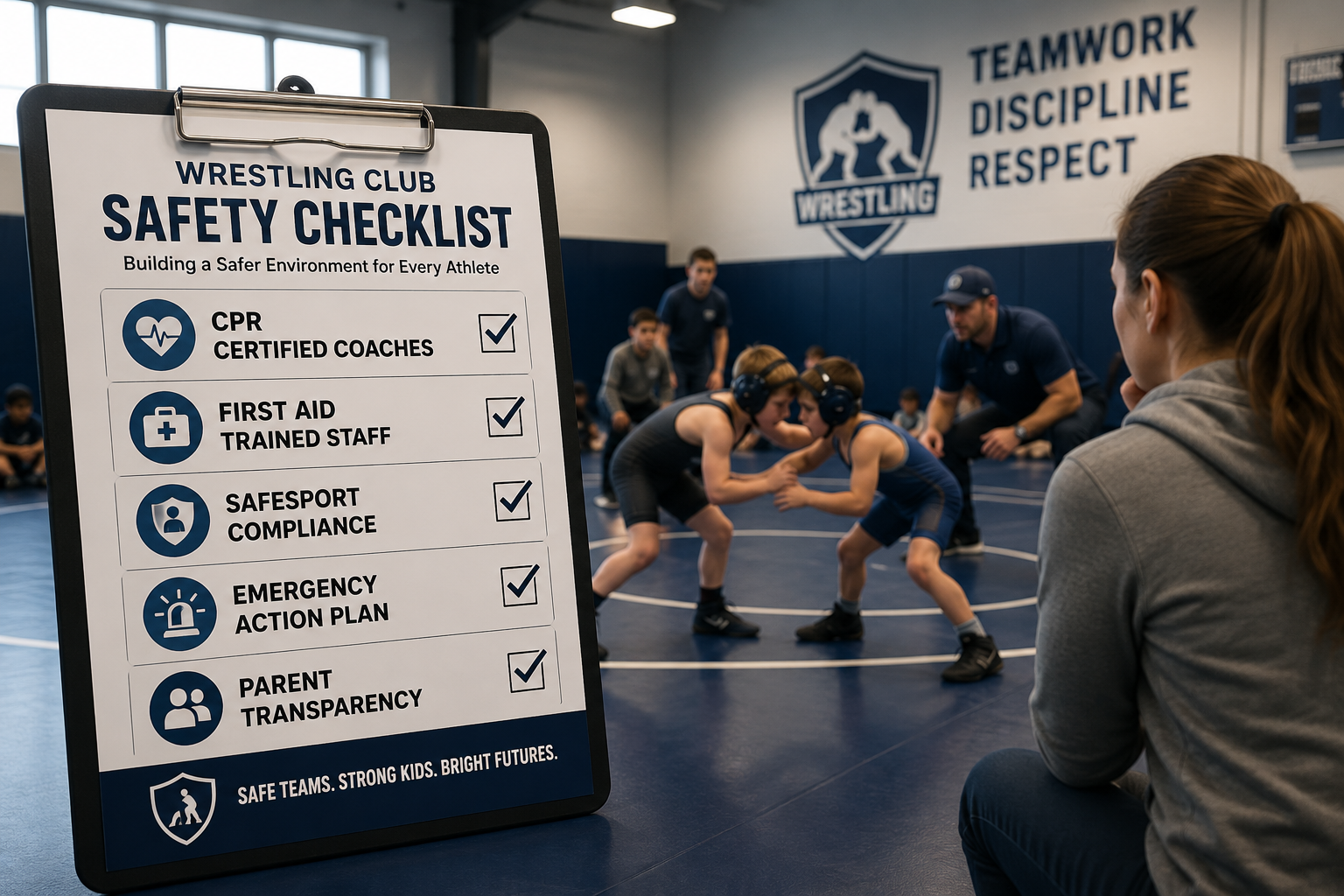
1. A Written Child Safeguarding Policy
The most fundamental document a youth sports organization should possess is a written child safeguarding policy. This is not a general code of conduct; it is a specific, structured framework that defines what constitutes inappropriate behaviour by adults toward minors, how such behaviour is reported, who investigates it, and what protections exist for the child making the report.
A safeguarding policy should be reviewed and updated annually, signed by all coaching staff, and available to parents upon request. Its absence is not an administrative oversight, it is a structural failure.
2. Mandatory Background Check Requirements for All Staff
Every person who works with minor athletes in any capacity; head coaches, assistant coaches, volunteer helpers, and administrative staff who have direct contact with children’s should be required to complete a criminal background check before they ever step onto the mat.
We have designed Wrestling Club Background Check Services, and are available to parents who want to independently verify whether the adults supervising their child have been properly screened because clubs do not always share this information proactively.
Look for programs that can tell you, specifically, which background check provider they use, how frequently checks are renewed, and whether checks include national sex offender registry screening.
3. A Two-Adult Rule or Equivalent Supervision Policy
No minor athlete should ever be alone with a single adult in a closed, private setting. This applies to coaching conversations, injury evaluations, locker room supervision, and travel. Programs that follow SafeSport standards or equivalent frameworks typically implement a two-adult rule, which requires that any situation involving a coach and a minor include a second adult witness.
Related Article:
When Reputation Replaces Accountability: How Unsafe Coaching Environments Stay Hidden
For a practical guide to evaluating this area before enrollment, see our article on Red Flags Every Parent Should Know Before Trusting a Coach.
4. A Clear and Accessible Reporting Mechanism
Children and parents must have a known, accessible way to report concerns and that mechanism must go beyond ‘talk to the head coach,’ especially if the head coach is the subject of the concern. Safe programs provide multiple reporting channels: a designated safeguarding officer, a written complaint process, and ideally an anonymous reporting option.
Equally important is that staff are trained not to discourage or dismiss reports. A reporting mechanism that exists on paper but is actively undermined in practice provides no real protection.
5. Emergency Response Procedures
Youth wrestling is a contact sport. Injuries are a normal risk, but how a program responds to injury tells you a great deal about its overall safety culture. Every club should have documented emergency response procedures that include at minimum: a protocol for assessing and responding to head injuries and concussions, access to a first aid kit, knowledge of the nearest emergency facility, and a clear chain of notification when a parent must be contacted urgently.
We will be exploring this topic in far greater depth in our upcoming deep-dive, What Emergency Equipment Should Be Present in Youth Sports Facilities? including what equipment is legally required versus what reflects genuine best practice.
Ask the club: What happens if my child is injured during practice? Walk me through the exact steps your staff takes.
6. Weight Cutting and Nutrition Safety Guidelines
Wrestling’s weight-class system creates a unique and serious risk: deliberate and extreme weight cutting by young athletes, sometimes encouraged or overlooked by coaches. This can cause severe short and long-term health consequences including dehydration, nutrient deficiency, disordered eating, and organ stress.
Clubs operating responsibly should have an explicit policy prohibiting coaches from instructing athletes to cut weight through dangerous methods, along with nutrition guidance that reflects age-appropriate development principles.
Our Safety Audit includes a review of nutrition and weight management protocols as part of a comprehensive assessment of a club’s operational safety.
7. A Social Media and Digital Communication Policy
In the modern environment, coaches communicate with young athletes through digital channels, and the boundaries around this communication matter enormously. A responsible club will have a written policy specifying which digital platforms coaches may use to communicate with athletes, whether all communication must include a parent on copy, and what constitutes an appropriate versus inappropriate digital interaction.
Related Article: What Wrestling Clubs Don’t Put in the Brochure: 11 Questions Parents Should Ask Before the First Practice
The absence of any such policy is not an outdated administrative gap. In today’s environment, it is a significant safeguarding risk.
This links closely to the investigative questions explored in Understanding SafeSport Policies: A Parent’s Guide, which outlines how governing body policies should inform club-level standards.
How to Request Policy Documentation
You are entitled to ask any youth sports program for copies of its policies. Frame the request professionally: ‘We’re doing our due diligence before enrollment. Could you please share your safeguarding policy, background check procedures, and emergency response protocols?’ A confident, well-run program will welcome this question.
Clubs that respond defensively, delay unreasonably, or provide vague verbal assurances instead of documentation should be treated with caution.
Frequently Asked Questions
Is there a national standard for youth wrestling safety policies?
USA Wrestling and the US Center for SafeSport have established guidelines that affiliate clubs are encouraged and in some cases required to follow. However, enforcement is inconsistent, and independent verification remains a parent’s most reliable protection.
Can I ask to see a coach’s background check results directly?
Generally, background check results are confidential and programs will not share the raw data. You can, however, ask for written confirmation that all coaching staff have passed screening through a named provider. If the program cannot provide this confirmation, that is a serious concern.
What if the club says these policies exist but won’t show them to me?
Oral assurances carry very limited weight in assessing organizational safety. A club unwilling to produce written documentation of its core safety policies may be concealing gaps in those policies.