Youth wrestling is often marketed as a sport that builds discipline, mental toughness, grit, and confidence. And in many programs, that is true. The right wrestling room can teach kids how to work through discomfort, develop self-control, and grow stronger through effort. But there is a part of wrestling culture that parents rarely hear about until it becomes personal: burnout, anxiety, and the emotional pressure young athletes carry when winning becomes more important than wellness. In combat sports like wrestling, the emotional red flags in young wrestlers are uniquely high.
Wrestlers are not only learning techniques. They are learning to handle public performance, loss, pressure on their bodies, authority dynamics, and the fear of disappointing adults who control their opportunities to improve. When the environment is healthy, those lessons build resilience. When the environment is unhealthy, the result can look like motivation from the outside but feel like fear on the inside.
This is where families need to pay attention. An unsafe wrestling club is not always unsafe in obvious ways. Sometimes the danger is invisible, a slow mental and emotional breakdown that gets dismissed as “part of the sport.” This article helps parents spot early warning signs, ask smarter questions, and protect young wrestlers before the damage becomes long-term.
Why Wrestling Pressure Hits Kids Differently
Wrestling carries psychological pressure that many youth sports do not. A wrestler is alone on the mat. There is no team to hide behind. Wins and losses feel personal and public, and many clubs unintentionally train kids to tie performance to identity.
Over time, young wrestlers may start associating self-worth with things like how many matches they win, whether coaches praise them, whether they are “tough enough,” whether they make weight consistently, and whether they are viewed as the hardest worker in the room. That can quietly create a fear-based mindset that sounds like this: “If I slow down, I will lose my spot.” “If I speak up, I will get punished.” “If I feel overwhelmed, I must be weak.”
This is how burnout begins. Not with quitting, but with survival mode. If you want a deeper internal read on the mental strain wrestlers carry, you can read The Hidden Wrestling Match: Mental Health of Student Wrestlers
Burnout in Wrestling Is Not Laziness, It Is Overload
Burnout is not simply “getting tired” of practice. It is a long-term emotional shutdown that happens when stress consistently exceeds recovery. In young wrestlers, burnout often shows up as a sudden drop in motivation, irritability after practice, mood swings on tournament weekends, emotional flatness even after wins, and a loss of excitement for a sport they once loved.
Some kids start saying “I don’t care” when they used to care deeply. Others become more injury-prone because fatigue and stress reduce coordination and increase risk. Parents often assume the child is being dramatic or going through a phase, but in high-pressure programs, burnout is often the body’s way of saying, “This environment is costing too much.”
Year-round competitive schedules can be a major driver here. Multiple practices per week, frequent tournaments, constant weight pressure, and little off-season mental recovery turn burnout from an “if” into a “when.” Healthy intensity is not the same as chronic overload.
Anxiety in Student Wrestlers: The Silent Injury
Anxiety can be harder to detect than burnout because it does not always look like sadness. It often looks like discipline. Some of the most “committed” kids are not driven, they are anxious. They are performing under pressure, not training with joy.
Common anxiety signals in young wrestlers include stomach aches before practice, trouble sleeping the night before competition, panic, crying in the car, constant worrying about disappointing a coach, perfectionism, fear of making mistakes, shaking or nausea before matches, and avoiding practice while insisting “I’m fine.”
When anxiety comes from unhealthy coaching culture, the club becomes emotionally unsafe even if the training looks professional. This is where parents should treat mental health as part of athlete safety, not a separate topic.
Emotional Red Flags Parents Should Never Ignore
A healthy wrestling club challenges athletes. It does not crush them. The challenge for parents is that many do not know what normal intensity looks like, so harmful pressure gets normalized.
One major red flag is when a child fears the coach more than they respect them. Respect builds growth. Fear builds silence.
If your child says things like “Coach will get mad if I lose,” “I can’t ask questions,” or “Don’t tell anyone I’m hurt,” that is not discipline. That is intimidation and directly overlaps with the GPS Wrestling unsafe and toxic culture.
Another red flag is when your child feels trapped. Watch for statements like “If I leave, I’ll be hated,” “Coach says quitting means I’m weak,” or “If I take a break, I’m done.” Pressure that removes choice is not motivation. It is control.
A third red flag is identity collapse outside wrestling. If your child loses interest in friends, hobbies, school activities, or feels guilty when resting, the sport may be consuming their sense of self. Emotional crashes after losses, shame spirals, and self-talk like “I don’t deserve to relax” are signals the environment may be feeding unhealthy beliefs.
Finally, watch for hiding pain and emotions to stay accepted. When a child believes they must “earn safety” by staying quiet, the environment is unhealthy, period.
The Standard Most Parents Never Ask About: Coaching Credentials and Emergency Training
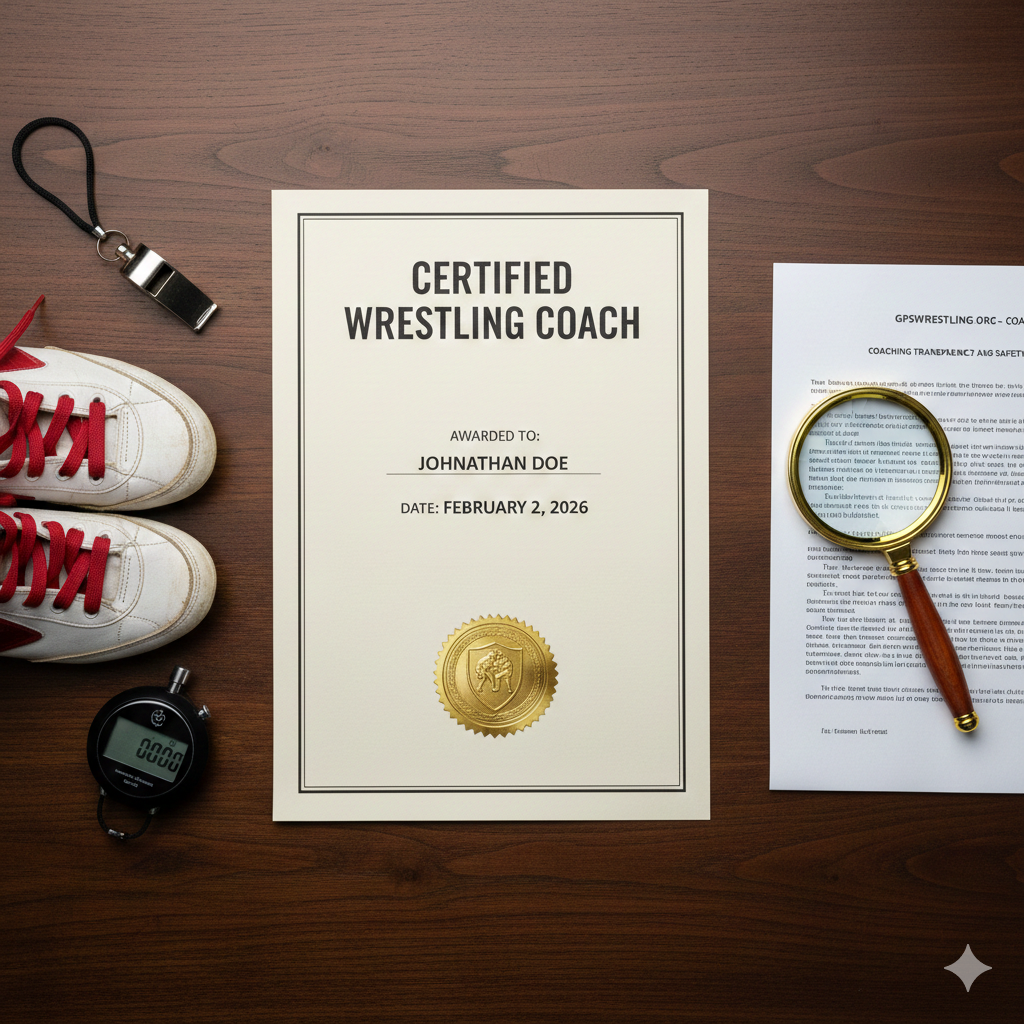
If a club claims it develops young athletes, it should be willing to prove it with professional standards. One key piece of safety that should be included in most youth wrestling evaluations is coaching, training, wrestling club credentials and emergency readiness.
Parents should expect that ALL coaches on the mat, not just the head coach, maintain current CPR, First Aid, and AED training. Emergencies do not wait for the “right adult” to be present. Clubs that only have one certified person are taking unnecessary risks.
Parents should also require USA Wrestling coaching certification at Copper and Bronze levels at a minimum. These certifications create a baseline for coaching education, athlete development, and safer training practices. If leadership cannot verify credentials clearly or reacts defensively to basic verification questions, that itself is a transparency signal.
Why Transparency Matters for Mental Health Too
Mental and emotional harm in youth sports rarely happens in a single dramatic moment. It builds gradually in a culture where questions are discouraged, standards are unclear, and kids learn to stay quiet to stay accepted. Parents cannot protect an athlete if they are missing key information about who is leading the room, what standards exist, and how concerns are handled.
GPSWrestling.org repeatedly frames this as a transparency problem, not a personality problem. When clubs hide, deny, or deflect, parents are forced to do their own investigation. The same pattern that raises risk for physical safety also raises risk for emotional harm, because it discourages accountability and normalizes silence
What Healthy Clubs Do Differently
Healthy wrestling rooms can still be intense. The difference is that intensity is structured, age-appropriate, and athlete-centered. Good clubs explain expectations clearly and reward growth, not fear. They pace competition so kids are not locked into nonstop burnout cycles. They respect injuries, rest, and recovery. They communicate responsibly with parents, and they allow normal questions without punishing families socially.
From a GPSWrestling.org internal cluster perspective, this is a strong section to interlink Safe Wrestling Training Standards for Young Wrestlers, since parents need a benchmark for what safe development looks like.
What Parents Can Do
Start by asking, “How did practice make you feel?” not “Did you win?” Listen for words anxious, embarrassed, pressured, scared, or exhausted. Then observe your child after practice, not during. Many kids mask stress on the mat, and the emotional crash happens later at home.
Ask the club direct questions:
- How do you prevent athlete burnout?
- Do you encourage rest periods?
- What is your injury protocol and reporting standard?
- Who supervises coaching conduct?
- Can you verify CPR/First Aid/AED training for all coaches and USA Wrestling Copper and Bronze certification?
Healthy clubs answer clearly and professionally.
Most importantly, teach your child that quitting harm is not quitting the sport. Leaving an unsafe wrestling club is not weakness. It is protection. A wrestler can find another room. A child only gets one nervous system.

FAQs: Burnout, Anxiety, and Youth Wrestling Pressure
How can I tell if my child is burned out from wrestling?
Burnout often looks like a loss of motivation, irritability, emotional flatness, frequent fatigue, and “I don’t care” statements from a child who used to be excited about training.
What are common anxiety signs in young wrestlers?
Stomach aches, insomnia before meets, panic crying before practice, perfectionism, fear of disappointing the coach, shaking or nausea before matches, and avoiding practice while insisting they are fine.
Is fear of a coach normal in wrestling?
No. Respect is normal. Fear that leads to silence, hiding injuries, or feeling trapped is a red flag and may reflect toxic culture.
What credentials should youth wrestling coaches have at minimum?
Parents should expect USA Wrestling coaching certification at Copper and Bronze levels minimally, plus current CPR, First Aid, and AED training for all coaches.
What should I do if my child wants to quit because of pressure?
Treat it as a data point, not defiance. Ask what is causing the pressure, document concerns, and evaluate the club’s culture and standards. Your goal is to protect the child’s well-being while preserving their love for sport.